Research Activities
INS Québec carries out research and innovation activities with a view to improving the performance of high-performance athletes. Working with partners in the academic, medical and private sectors, the Institute’s scientific and medical personnel study, develop and create cutting-edge solutions. These scientific endeavours touch a variety of fields: motor learning, biomechanics, chronobiology, engineering, neuroscience, nutrition, physiology, psychology, etc.
Here are some significant examples or click here for the full list of research projects.
Virtual Reality
VIRTUAL REALITY BOXING SIMULATOR BY DIGITAL VISION
In partnership with the École de technologie supérieure, Thomas Romeas develops a virtual reality boxing simulator as a training tool for elite boxers. Using numerical vision methods, video footage of elite boxers’ movements is transformed into 3D kinematics and embedded within a virtual reality engine to provide an agile and interactive simulator.
Principal investigators
- Hossein Feiz, Ph.D. student, École de technologie supérieure
- David Labbé, professor, École de technologie supérieure
- Sheldon Andrews, professor, École de technologie supérieure
- Jocelyn Faubert, professor, Université de Montréal
- Thomas Romeas, neuroscientist, INS Québec; associate professor, Université de Montréal
Period: 2020–2024
Funding: Mitcas, OTP
Injury Prevention
EPIDEMIOLOGY OF CONCUSSIONS
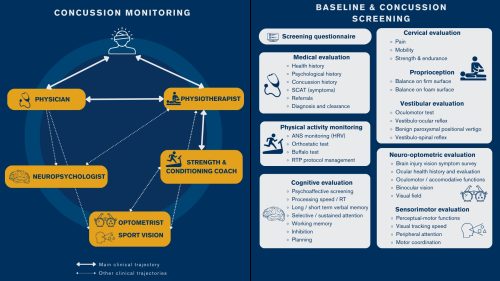
The Institute is conducting an epidemiological study on concussions and testing the effectiveness of a multidisciplinary approach and early management based on the latest consensus on sport-related concussions.
Principal Investigators
• Thomas Romeas, Head of Research and Innovation, INS Québec; Adjunct Professor, Université de Montréal
• Félix Croteau, Physiotherapist, INS Québec
• Dr. Suzanne Leclerc, Medical Director, INS Québec; Associate Clinical Professor, Université de Montréal
Period: 2022–2023
Funding: None
Discover all our research projects
INS Québec has more than 40 research projects to its credit, divided into the following categories:
- Artificial intelligence
- Dissemination of information
- Engineering
- Injury Prevention
- Innovation
- Performance analysis and monitoring
- Performance optimization